If anyone may be in immediate danger, call 911 or your local emergency number.
About the Founder and Author
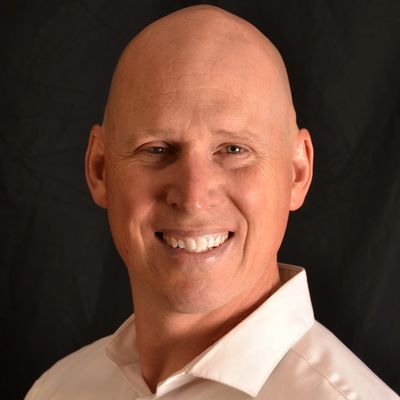
Steven Marcel Melanson
Founder of Beyond Hurting Inc. and creator and author of YHurt.com.
This work draws from experiences within my own life and family—including addictions, injury, loss, instability, difficult relationships, and times when my own behaviour failed to reflect my values and caused harm.
Those experiences and a yearning to understand why I behaved as I did led me to look more closely at what shapes us, what happens between us, and what might make different choices possible.
Why I Built YHurt.com
Over the years, I noticed that people from completely different walks of life—people struggling with addiction, trauma, homelessness, broken relationships, anxiety, grief, success, failure, and everything in between—often seemed to be asking variations of the same question.
Not the same circumstances, the same human question:
Why do we do what we do—especially when our actions cause pain, contradict our values, or take us somewhere we never intended to go?
The answer was not one thing.
What we do emerges from what we bring into the moment: what we have experienced, learned, needed, feared, come to believe, and have the capacity to recognize and choose at the time.
That does not make every action acceptable or remove responsibility for its consequences.
It helps explain how people can care deeply, know better, and still behave in ways that cause harm or contradict who they want to be.
That understanding led to another question:
Could there be a way to help people understand themselves and one another without telling them who they are, what they should believe, or how they should live?
As I recorded my search for answers, I began to recognize questions, connections, and tools that could be shared.
Not as a path for others to follow, but as a way to help them better understand their own lives and find their own way home.
That journey became YHurt.com.
I believe greater personal understanding can provide benefits of its own while working alongside therapy, recovery programs, medicine, and other professional support.
Regardless of where we begin, we all carry experiences that shape how we see ourselves, each other, and the world.
If we can learn to understand those connections, we don't just change our behaviour.
We change what becomes possible.
My hope is simple.
That more people come to see themselves with greater honesty and compassion.
That they find enough peace to walk their own path.
And that, in doing so, they become someone who helps others feel seen too.
Relevant Life Experience
My background is not confined to one profession or social environment.
I worked for many years in corrections, including leadership roles and service on an emergency response team, interacting directly with people in crisis, conflict, withdrawal, grief, and anger. The work required building trust quickly, paying close attention to behaviour, risk, communication, and changing conditions, and maintaining stability under pressure.
Outside of corrections, I have worked across trades, operations, security, sales, management, and business ownership. I have supervised teams, led projects, trained staff, and managed situations where safety, timing, and human factors all mattered.
I have also volunteered in community outreach, mentoring, coaching, event organization, and church leadership roles, working with youth, adults, and people in distress.
These experiences placed me in regular contact with people living under very different social, economic, and personal conditions.
Alongside this practical experience, I spent many years actively trying to understand why people struggle and what actually helps. This included long-term therapy, participation in numerous relationship and personal-growth programs, extensive reading across psychology, self-development, spirituality, and human behavior, and sustained personal reflection.
Over time, this combination of lived experience and deliberate study showed me that human struggle is shaped by more than intelligence, willpower, morality, or circumstance alone.
I am not a psychologist, therapist, physician, or licensed mental-health professional.
YHurt.com is informed by lived experience, observation, sustained personal study, and the work of established thinkers and practitioners. It is offered as educational and reflective material—not clinical assessment, diagnosis, or treatment.
What This Work Is — And Is Not
This project does not present me as an authority on your life.
It is not therapy, doctrine, ideology, or a program to follow. It does not require belief, agreement, or personal disclosure.
It brings together patterns that many people experience but may never have seen connected or explained in one place.
Nothing here asks you to accept conclusions because of who I am.
The goal is for the material to stand on its own.
If it resonates, it should do so because it reflects your experience, not because it was delivered by a particular person.
I am not claiming to have discovered ultimate truth or a universal solution.
I am offering a framework that may help people understand themselves and each other with more clarity and less shame.

Why Make This Public
Private understanding was not enough.
The patterns described here affect families, workplaces, institutions, and communities. They influence conflict, loneliness, burnout, polarization, and cycles of harm that repeat across generations.
Making this work public is an attempt to contribute something constructive — a way of seeing that reduces blame without removing responsibility, and increases understanding without demanding conformity.
If it proves useful, it belongs to everyone who benefits from it.
Personal Context
My life has included both stability and instability.
I grew up in a middle-class home shaped by alcoholism and the long shadow of intergenerational trauma. As an adult, I experienced periods of success, health, and
stability, as well as periods of serious loss, injury, relational breakdown, and uncertainty.
A major turning point came during the collapse of my family life, when I realized that some of the ways I expressed love and connection were causing harm even though my intentions were good.
That moment raised a deeper question than “How do I fix this?” — it raised the question “Why am I doing things I don’t want to do at all?”
Understanding those patterns required confronting uncomfortable truths about conditioning, identity, stress responses, and the gap between intention and behavior.
This work emerged from that search for understanding, not from a position of having everything figured out.
A Final Note
You do not need to trust me to explore this site.
You can move at your own pace, examine what is offered, question it, and decide for yourself what is useful, what is not, and what you want to do with it.
Your judgment matters more than my intentions.
If this work helps you understand your own experience, your relationships, or the pressures you live under, then it has served its purpose.
— Steven Marcel Melanson
Where You Can Go From Here
To explore the complete directory of pages and tools:
To understand where the project is headed:
For professional, organizational, partnership, or media inquiries:
If you would like to help the work continue:
Copyright © 2026 - All Rights Reserved.
This site provides educational and reflective material.
It is not a replacement for professional medical or mental health care.
This website uses cookies.
We use cookies to analyze website traffic and optimize your website experience. By accepting our use of cookies, your data will be aggregated with all other user data.